
In short
- Neither condition is contagious.
- Long-term use of strong steroid creams causes harm and should be replaced by a supervised plan.
- Biologics and JAK inhibitors are now first-line treatments, not a last resort.
Is it psoriasis or eczema?
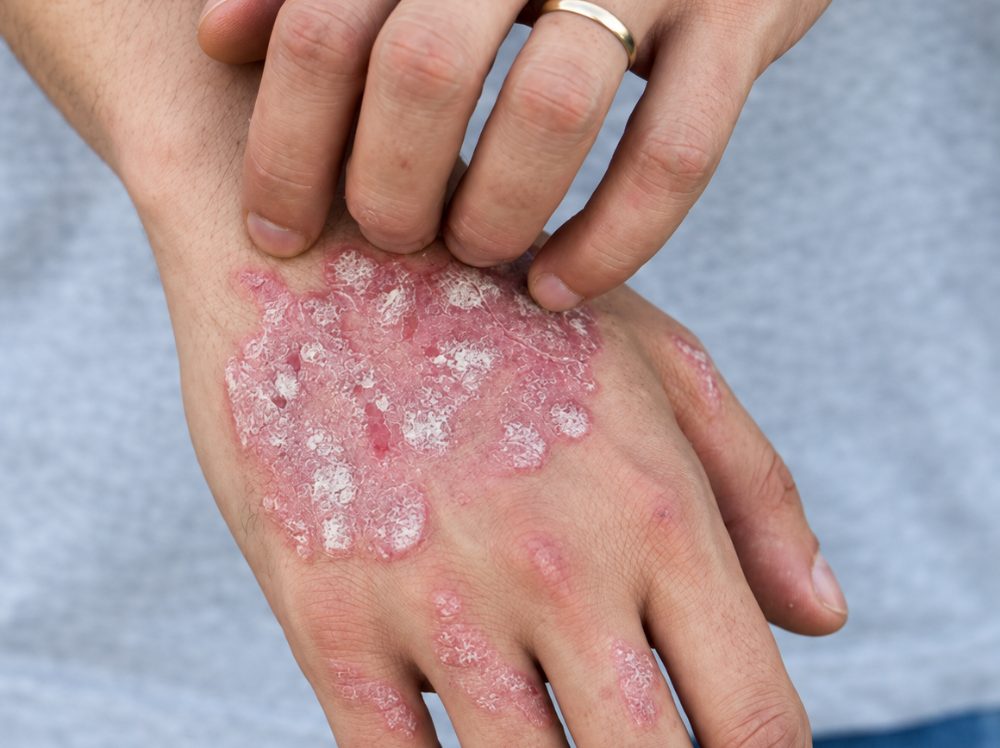
- Psoriasis: thick, well-defined red plaques with silvery scale, often on elbows, knees, scalp and lower back. Joint pain or morning stiffness can mean psoriatic arthritis, which needs treatment too.
- Eczema (atopic dermatitis): dry, very itchy skin with flares in the folds of arms and legs, often with a history of allergies or asthma.
How are psoriasis and eczema treated?
- Biologics, injections that block a single signal driving the disease, such as IL-17, IL-23 or TNF-α blockers for psoriasis and dupilumab for eczema.
- JAK inhibitors, targeted tablets that work quickly in psoriasis and eczema.
- Moisturisers and barrier repair every day, even when the skin is clear.
- Steroid-free creams for long-term control and for the face and folds.
- Phototherapy: controlled light treatment for widespread disease.
- Tablets such as methotrexate or cyclosporine, with blood test monitoring.
- Treating infection that often triggers eczema flares.
Screening tests, including for tuberculosis and hepatitis, are done before biologics and JAK inhibitors. Read biologics and newer targeted therapies and JAK inhibitors for eczema for the details.
If you have used strong steroid creams for months, read how steroid damage happens and how it is reversed.
What triggers a flare?
- Psoriasis: stress, throat infections, some medicines, smoking and alcohol.
- Eczema: hot water, harsh soaps, sweat, rough fabrics and dust.
How quickly does treatment work?
- Flares settle within weeks on the right treatment.
- On newer targeted treatment, plaques usually improve in the first 2 to 4 weeks, with most of the clearance by 3 to 4 months.
- Treatment is then reduced to the lowest level that keeps the skin clear.
What does it cost?
Cost depends on how severe the problem is and which treatments suit you. After the consultation you are told the likely number of sessions and the cost before anything is booked.
Further reading
- Biologics and newer targeted therapies for psoriasis, eczema and pemphigus
- Newer psoriasis treatments: biologics and JAK inhibitors
- JAK inhibitors for eczema: safety questions answered
- Steroid-damaged face: signs, causes and safe recovery
Common questions
Is psoriasis contagious?
No. Psoriasis and eczema cannot spread from person to person by touch, sharing towels or living together.
Will I need treatment for life?
Both conditions come and go over years. Most people need some long-term care, but it is reduced to the minimum once the skin is controlled.
Are biologics affordable in India?
Cost varies a great deal between medicines, and biosimilar versions have lowered it. Options that fit your budget are discussed at the consultation.
Book a consultation
110 Sky City Arcade B-Block, Club O7 Road, Shela, Ahmedabad. Monday to Saturday, 9 am to 7 pm.
Medical disclaimer. This page is general information about treatment at Pigment Skin Clinic. It does not replace a consultation, and the right treatment for you depends on an examination.