

Key takeaways
Topical steroid damaged face (TSDF) is the redness, burning, acne-like bumps, thin skin and sun sensitivity that develop after a steroid cream, often sold as a “fairness”, acne or all-purpose cream, has been used on the face for weeks to years. It is very common in India and is not your fault. The face usually flares when the cream is stopped, which is why many people feel trapped. With a supervised plan, stopping or stepping down the steroid, calming the skin with steroid-free medicines, and strict sun and barrier care, most faces recover substantially over several months. Do not stop overnight on your own if you have used a strong cream for a long time; see a dermatologist first.
What is topical steroid damaged face?
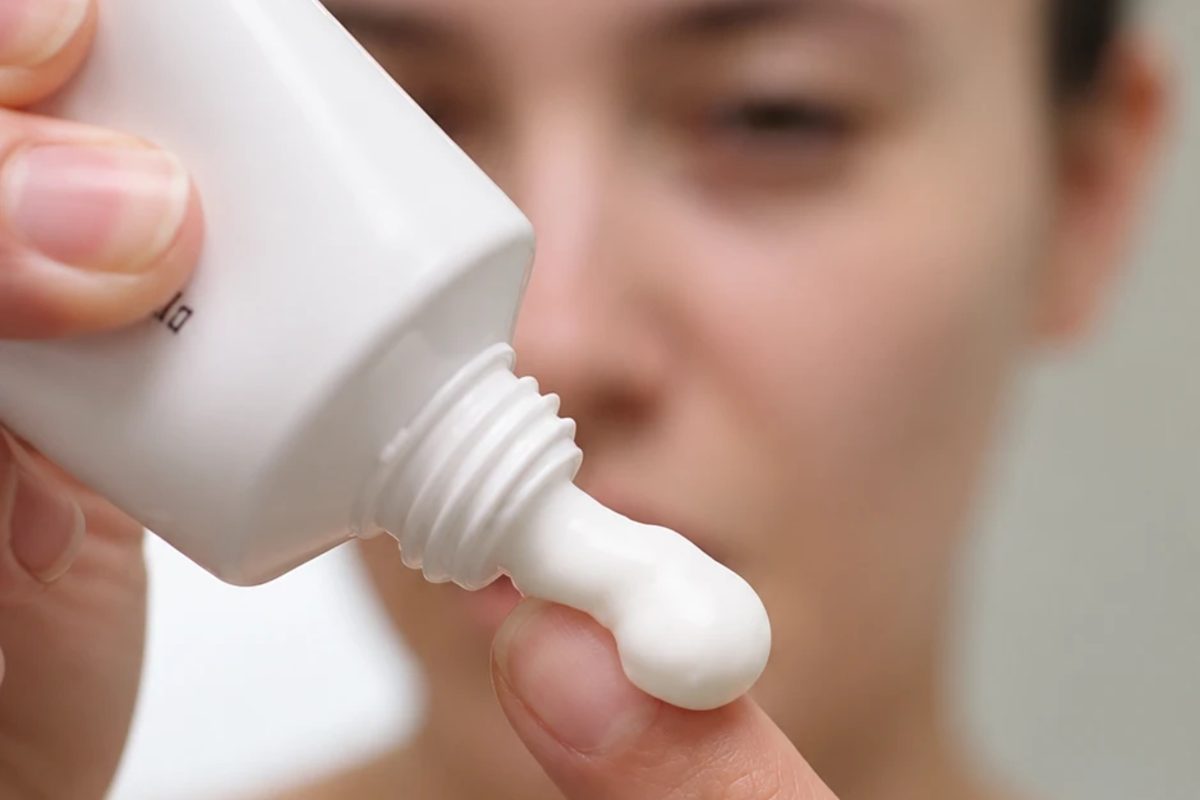
TSDF is a group of skin changes caused by using a steroid cream on the face for longer than it should be used.
Steroid creams (topical corticosteroids) are useful medicines for eczema, psoriasis and some allergic rashes when a doctor prescribes the right strength for the right time.
Common signs
| What you notice | What is happening in the skin |
|---|---|
| Persistent redness, flushing with heat, sun or spicy food | Small blood vessels have widened and the skin’s barrier is weak |
| Burning, stinging, itching | Damaged barrier and inflamed nerve endings; worse when the cream is missed |
| Small red or pus bumps, often uniform | Steroid-induced acne |
| Thin, shiny, fragile skin; visible thread veins | Atrophy (thinning) and telangiectasia |
| Dark or light patches; easy tanning | Pigment changes and photosensitivity |
| Fine facial hair growth | Steroid-induced hypertrichosis |
Common ways people start
- Combination creams that mix a steroid with an antifungal, antibiotic, hydroquinone or tretinoin, used for pimples, pigmentation, melasma or ringworm.
- “Fairness” or “skin-whitening” creams from shops, online sellers or salons. Some cosmetic creams have been found to contain hidden steroids.
How to check your cream
Look at the small print on the tube for words such as clobetasol, betamethasone, mometasone, fluticasone, fluocinolone, halobetasol, beclomethasone, desonide or hydrocortisone. Bring the tube, or a photo of the label, to your appointment, even if you think it is “only a cream”.
Ringworm treated with steroid creams can spread in an unusual pattern and become hard to recognise. Getting the diagnosis right matters, because the original condition needs its own treatment once the face has settled.
What happens when you stop the steroid cream?
Most people get a rebound flare, more redness, burning, swelling and bumps, starting within a few days of stopping, which then settles gradually over weeks to months with the right care.
How do you stop a steroid cream safely?
Stopping is planned with a dermatologist: for some people the cream is stopped at once with strong support for the flare, and for others, especially after long use of a potent steroid, it is stepped down to a milder one over a few weeks.
There is no single schedule that suits everyone, and dermatologists in India use different approaches. What matters is that you are not left alone with the flare. A supervised plan usually includes:
- Identifying every product you use, including creams that do not say “steroid” on the front.
- A decision on stopping: stop at once, or switch to a lower-strength steroid for a short, defined period and then stop. You will be given exact dates.
- Starting steroid-free treatment early, so it is working by the time the steroid is gone.
- A flare plan: what to do at home on a bad day, and when to call the clinic.
What treatments help the face recover?
Recovery relies on steroid-free medicines that calm inflammation and bumps, gentle barrier repair, and strict sun protection; procedures such as laser are kept for later, once the skin has settled.
Daily skin care during recovery
Keep it simple: a gentle cleanser, a plain moisturiser, a mineral sunscreen and your prescribed medicine, and nothing else until your dermatologist says so.
- Wash with lukewarm water and a mild, soap-free cleanser; pat dry. Avoid scrubs, face packs, steaming and facials.
- Moisturise twice a day with a fragrance-free cream; keep it in the fridge if cool application helps the burning.
- Sun: sunscreen every morning, plus shade, a hat or dupatta. Ahmedabad’s heat and sun are strong triggers for flushing; avoid midday sun where you can.
- Cool compresses with a clean cloth and cool (not ice) water for 10 minutes during a burning flare.
- Avoid for now: vitamin C, retinol, AHA/BHA acids, bleach, waxing or threading on the face, and any new product without checking.
How can it be prevented, or stopped from coming back?
Use a steroid on the face only when a doctor prescribes it, for the stated number of days, and never as a fairness, pimple or general-purpose cream.
What happens at a consultation at Pigment Skin Clinic?
At a first visit in Shela, Ahmedabad, Dr. Kathak Patel takes a careful history of every product you have used, examines your skin, explains what is TSDF and what may be an underlying condition, and gives you a written step-down and recovery plan.
- Bring every cream and face product you have used in the past year, or photos of the labels, and any old prescriptions.
- Examination with dermoscopy, and tests such as a fungal scraping only if needed.
- A written plan: how and when to stop, what to apply each morning and night, which tablets (if any), and what to do in a flare.
- Follow-up at regular intervals, with photographs to track change.
Consultations are available in English, Hindi and Gujarati. Related reading: why melasma keeps coming back and a simple four-product routine. Read more about Dr. Kathak Patel.
Frequently asked questions
How long does a topical steroid damaged face take to heal?
It varies with how strong the cream was and how long it was used. Many people see clear improvement over two to six months of supervised treatment, and some need longer. Persistent redness or thread veins can be treated later with laser if needed.
Should I stop my steroid cream immediately?
Not on your own if you have used a strong cream on your face for a long time. A dermatologist will decide whether to stop at once with support for the flare or to step down to a milder cream for a short time. Either way, you should have a plan before you stop.
Why does my face get worse after stopping the cream?
Steroids tighten blood vessels and suppress inflammation. When they are stopped, the vessels open up and inflammation returns strongly for a while, causing a rebound flare. This is expected and settles with the right treatment.
Is the damage permanent?
Most changes, redness, burning, bumps and sensitivity, improve a great deal. Very long use can leave some thinning or thread veins, which can often be improved with time and, if needed, laser treatment.
Can I use a fairness cream once my skin has healed?
Avoid creams that promise instant fairness, and never use a steroid as a lightening cream. If pigmentation bothers you, a dermatologist can suggest safe, steroid-free treatment.
Is tacrolimus a steroid?
No. Tacrolimus and pimecrolimus are calcineurin inhibitors. They calm inflammation without thinning the skin, which is why they are often used in TSDF. They can sting or feel warm for the first few days.
How do I know if my cream contains a steroid?
Read the ingredients for names such as clobetasol, betamethasone, mometasone, fluticasone, fluocinolone, halobetasol or hydrocortisone. If you are unsure, bring the tube or a photo of the label to your dermatologist.
Can I use make-up during recovery?
Keep make-up to a minimum. For occasions, a gentle mineral-based product, removed the same day with a mild cleanser, is usually acceptable. Avoid heavy foundations, bleach and facials until your skin has settled.
Will antibiotics be needed?
Low-dose doxycycline or azithromycin are often used for their anti-inflammatory effect on bumps and redness, not because of an infection. Your dermatologist will tell you how long to take them.
Does TSDF happen with mild steroid creams too?
It is most common with strong steroids used for months, but even milder steroids can cause problems on the face if used daily for a long time. Any steroid on the face should be used only as prescribed.
Worried about your skin after a steroid cream?
A consultation gives you a clear, supervised plan to stop safely and help your face recover.
Medical disclaimer. This article is for general education only. It is not a substitute for a consultation and examination by a qualified doctor who knows your medical history. Do not start, stop or change any medicine without medical advice.