

Key takeaways
A chemical peel helps acne when it is matched to the type of acne and to your skin. For oily skin, blackheads and active pimples, salicylic acid is usually the first choice; for post-acne marks, glycolic or mandelic acid peels help more. Indian skin (types III–V) darkens easily after irritation, so we start at lower strengths, prepare the skin for two to four weeks and insist on sun protection. Most people need three to four sessions, two to three weeks apart; acne marks often need six. A peel works best alongside medical acne treatment, not instead of it.
What does a chemical peel do for acne?
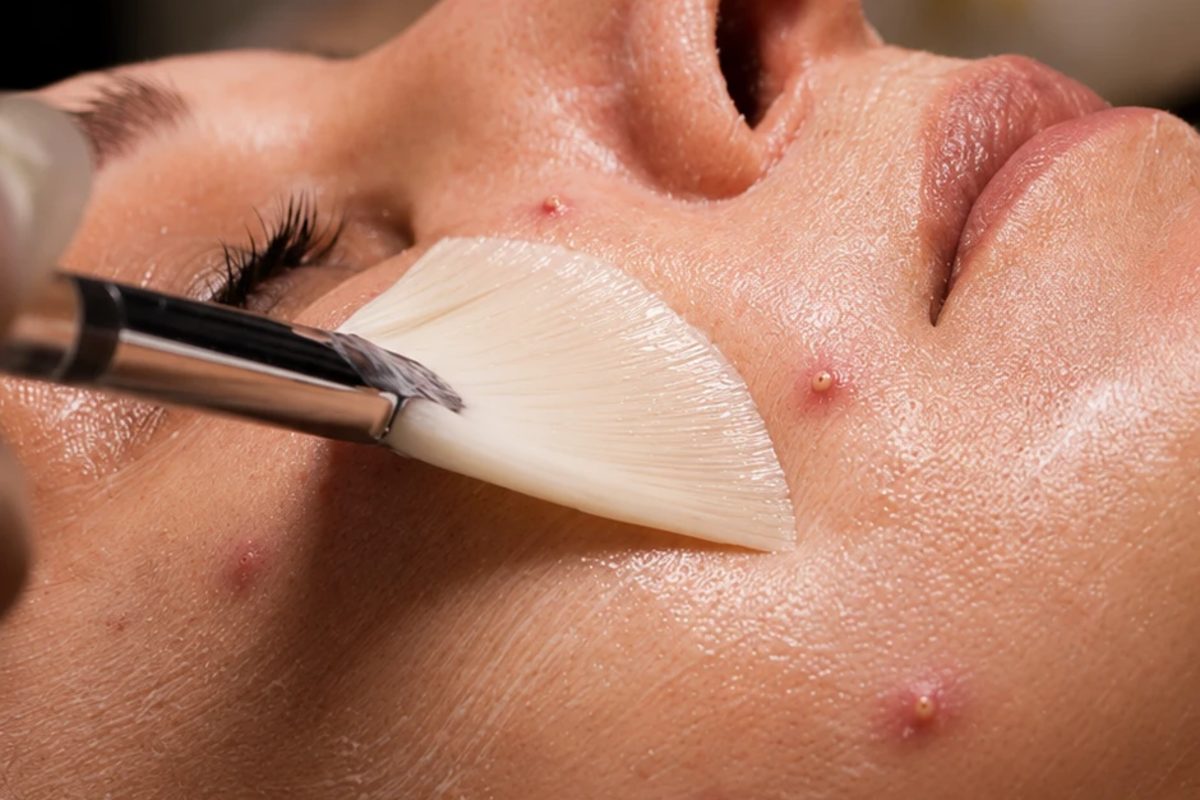
A chemical peel is a controlled acid application that loosens dead skin, clears blocked pores and, with some acids, reduces oil and inflammation, so pimples settle faster and marks fade sooner.
Superficial peels, the kind used for acne, act only on the top layer of skin.
Which peel suits which acne?
Salicylic acid suits oily skin, blackheads and active pimples; glycolic and mandelic acid suit marks and uneven tone; combination peels are used when both are present.
| Peel | Best for | Notes on Indian skin |
|---|---|---|
| Salicylic acid 20–30% | Oily skin, blackheads, whiteheads, active pimples | Oil-soluble, so it enters pores; calms redness; low risk of darkening |
| Glycolic acid 20–70% | Post-acne marks, dull uneven tone, mild bumps | Effective but can sting; needs careful timing and neutralising |
| Mandelic acid 20–40% | Sensitive skin, marks, mild active acne | Larger molecule, penetrates slowly; gentle option for darker skin |
| Salicylic–mandelic combination | Active acne with marks | Performed as well as glycolic peels in an Indian comparison |
| Jessner's solution | Stubborn oily acne | Stronger; higher irritation, used selectively |
| TCA (trichloroacetic acid) | Selected acne scars (often as spot treatment) | Not a routine acne peel; scar treatment only by a dermatologist |
Post-acne marks, flat brown or dark spots, are not scars. They fade with peels and creams. Pitted or depressed scars need different treatments such as microneedling, subcision or laser.
Why is Indian skin different?
Brown skin responds well to peels but is prone to post-inflammatory hyperpigmentation, darker patches after any irritation, so strength, preparation and sun care matter more.
Why combine peels with medical acne treatment?
Peels work faster and last longer when used with standard acne treatment, creams such as adapalene or benzoyl peroxide, and tablets when needed, because the peel clears the surface while the medicine treats the cause.
- Mild acne: creams plus a peel series can be enough.
- Moderate acne: a course of antibiotic tablets or hormonal treatment (for some women) may be added.
- Severe or scarring acne: isotretinoin is usually the main treatment. Superficial peels can sometimes be continued during isotretinoin under specialist supervision.
Stopping your acne medicine because you have started peels is one of the most common reasons peels "do not work".
How many sessions will I need?
Most people need three to four; acne marks often need six.
What happens during a peel session?
- Your face is cleansed and degreased.
- The peel is applied for a set time, usually a few minutes. Warmth, tingling or stinging is expected.
- The peel is neutralised or washed off.
- A soothing moisturiser and sunscreen are applied. The session takes about 20–30 minutes.
When is a peel the wrong choice?
A peel is not advised when the skin is irritated or infected, or when the main problem is something a peel cannot treat.
- Very inflamed, painful nodules or cysts, these need medicine first.
- Active cold sores, skin infection, open wounds or sunburn.
- Steroid-damaged skin, redness, burning and bumps after long-term steroid creams. Peels can worsen it; see our article on topical steroid damaged face.
- Pregnancy: salicylic acid peels are usually avoided; some mild peels may be considered after discussion.
- Deep, pitted scars as the main concern, a peel alone will not lift them.
What happens at a consultation at Pigment Skin Clinic?
At a first visit in Shela, Ahmedabad, Dr. Kathak Patel grades your acne, checks for marks versus scars, reviews what you have tried, and plans medicine and peels together.
Bring your current creams and any past prescriptions. Consultations are available in English, Hindi and Gujarati. Read more about Dr. Kathak Patel.
Frequently asked questions
Which chemical peel is best for acne on Indian skin?
For oily skin, blackheads and active pimples, a salicylic acid peel is usually the first choice. For post-acne marks, glycolic or mandelic acid peels are often used. The right choice depends on your acne type and skin sensitivity.
How many chemical peel sessions are needed for acne?
Most people need three to four sessions, two to three weeks apart. Post-acne marks often need six. Occasional maintenance peels can help keep acne controlled.
Can a chemical peel make my skin darker?
Yes, if the peel is too strong, the skin is not prepared, or sun protection is poor. Starting at a low strength, priming the skin and using sunscreen daily reduce this risk.
Can I stop my acne medicine once I start peels?
No. Peels work best alongside medical acne treatment. Stopping creams or tablets is a common reason acne returns.
Do chemical peels remove acne scars?
Superficial peels fade flat dark marks but do not lift deep, pitted scars. Scars need treatments such as microneedling, subcision or laser.
Can teenagers have chemical peels?
Yes, mild salicylic acid peels are commonly used in teenagers with oily skin and acne, alongside creams, after a dermatologist examines the skin.
Is there downtime after an acne peel?
Usually very little. Mild redness and flaking for two to five days is common; most people return to work or college the same day.
Acne or marks not improving?
A consultation can match the right peel and medical treatment to your acne and skin type.
Medical disclaimer. This article is for general education only. It is not a substitute for a consultation and examination by a qualified doctor who knows your medical history. Do not start, stop or change any medicine without medical advice.