

Key takeaways
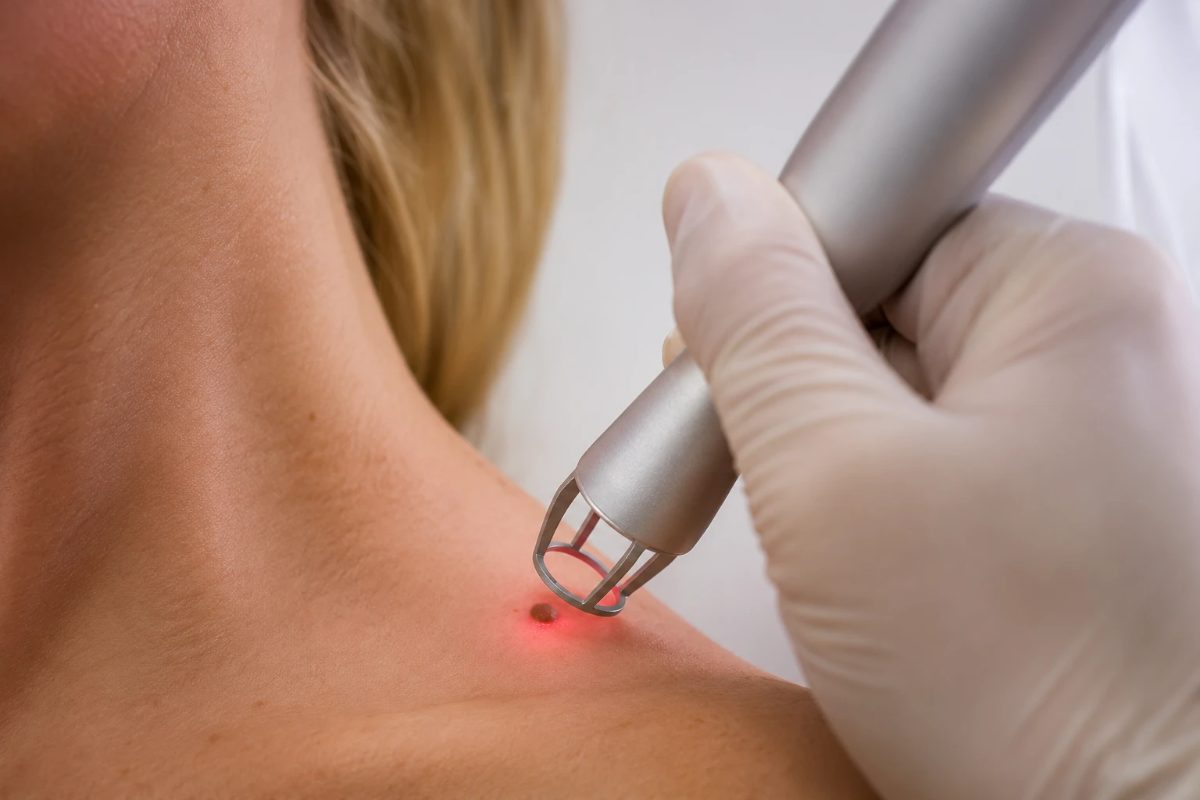
Most moles, skin tags and warts are harmless and can be removed safely by a dermatologist. A mole is examined with a dermatoscope first; if it is changing or looks unusual, it is removed completely and sent for testing. Skin tags are snipped or treated with CO2 laser in minutes and rarely return at the same spot, though new ones may appear. Warts are a viral infection. The right method for each lesion, careful technique and good scar care give the best cosmetic result.
Is it safe to remove a mole?
Yes, when a dermatologist examines it first and chooses the right method. What is not safe is burning off a mole without checking it, or using creams, acids or home "mole removers".
Before removal, the mole is looked at with a dermatoscope, a magnifying light that shows patterns beneath the surface. If it looks ordinary, it can be removed for cosmetic reasons. If it looks unusual, the whole mole is removed and sent for histopathology (testing under a microscope).
Which mole warning signs need a check?
See a dermatologist promptly if a mole is changing, looks different from your other moles, or follows the ABCDE pattern.
- Asymmetry: one half does not match the other.
- Border: ragged, blurred or notched edges.
- Colour: several shades of brown, black, red, white or blue.
- Diameter: usually larger than 6 mm, though smaller ones can matter.
- Evolving: changing in size, shape, colour, height, or new itching or bleeding.
How is a mole removed?
Moles are removed by punch excision or surgical (elliptical) excision under local anaesthetic; the choice depends on the mole's size, depth, site and whether it needs testing.
Skin tags: why they appear and how they are removed
Skin tags (acrochordons) are soft, harmless flaps of skin on the neck, underarms, eyelids and groin, more common with weight gain, pregnancy, diabetes and friction.
Many skin tags in an adult can be a sign of insulin resistance, so we may suggest a sugar test. Removal is quick:
- CO2 laser for small and flat tags; many can be done in one sitting.
Eyelid tags need extra care and a precise technique. Threads, tying off at home, or cutting at home risk bleeding and infection.
Warts: types, treatment and why they come back
Warts are caused by human papillomavirus (HPV) and spread by touch, shaving or walking barefoot; because the virus can stay in nearby skin, warts often need several treatments and can recur.
| Treatment | Used for | What to expect |
|---|---|---|
| CO2 laser, radiofrequency or electrocautery | Stubborn or filiform warts on face or hands | Done under local anaesthetic; heals in 1–2 weeks |
| Immunotherapy injections or creams | Many or recurrent warts | Helps the body recognise the virus; can clear distant warts too |
Plantar warts (on the sole)
Plantar warts grow inwards from walking pressure and can be painful. They look like corns but show tiny black dots. Paring the hard skin before each treatment helps, and treatment often takes longer than for hand warts.
Why warts come back
- Virus remains in surrounding skin that looks normal.
- Picking, biting nails or shaving over warts spreads them.
- Barefoot walking in shared bathrooms, gyms or pools.
- Stopping treatment as soon as the wart looks smaller.
- Lower immunity, including diabetes or certain medicines.
Aftercare and scar care
Keep the wound clean and covered, follow the dressing advice, and protect the healing skin from the sun for at least three months, this matters most for preventing dark marks on Indian skin.
- Clean gently once or twice a day; apply the prescribed ointment and a dressing until healed.
- Once healed, silicone gel or sheets for 8–12 weeks can help scars flatten and fade.
- Use sunscreen on the area daily; scars darken easily in the sun.
- If you have had keloids before, tell us beforehand, we plan the method and aftercare differently.
Do they come back?
- Moles: surgical excision rarely recurs; a shaved mole may show some pigment again, which is usually harmless but should be checked.
- Skin tags: a removed tag rarely regrows, but new tags may form with the same risk factors.
- Warts: recurrence is common; finishing the full course reduces it.
What happens at Pigment Skin Clinic?
At a visit in Shela, Ahmedabad, Dr. Kathak Patel examines each lesion with dermoscopy, explains the method, expected scar and cost, and usually removes simple lesions the same day or at a planned short appointment.
Tell us about blood thinners, diabetes, pregnancy, allergies to anaesthetic, or past keloids. Consultations are available in English, Hindi and Gujarati. Read more about Dr. Kathak Patel.
Frequently asked questions
Does mole removal leave a scar?
Every removal leaves some mark, but with the right method and aftercare it is usually small and fades over months. Shave removal leaves a flat mark; surgical excision leaves a fine line scar.
Is mole removal painful?
The area is numbed with a local anaesthetic injection, so the procedure itself is usually painless. Mild soreness for a day or two is common.
Does every removed mole need testing?
Not every mole. A mole that looks ordinary on dermoscopy may be removed for cosmetic reasons without testing, but any changing or unusual mole should be removed completely and sent for testing.
Can a mole grow back after removal?
A fully excised mole rarely returns. After shave removal some pigment can reappear; it is usually harmless but should be shown to your dermatologist.
Are skin tags a sign of diabetes?
Not always, but many skin tags, especially with weight gain or dark velvety neck skin, can be linked with insulin resistance. A simple blood sugar test may be advised.
Why do my warts keep coming back?
Warts are caused by a virus that can remain in nearby skin. Picking, shaving over warts, barefoot walking in shared spaces, and stopping treatment early all increase recurrence.
Can I remove a skin tag or wart at home?
Home cutting, tying or burning risks bleeding, infection, scarring and missing a lesion that needs testing. It is safer to have it examined and removed by a dermatologist.
Worried about a mole, or want it removed?
A consultation can check it with dermoscopy and plan the removal method with the least scarring.
Medical disclaimer. This article is for general education only. It is not a substitute for a consultation and examination by a qualified doctor who knows your medical history. Do not start, stop or change any medicine without medical advice.